From Sand to Skyscrapers:
The Science of Making Glass from Liquid Sand
Glass is a material so ubiquitous that it often goes unnoticed. It forms the screens of our smartphones, the windows of our homes, and the windshields of our cars. Yet, despite its transparency and common presence in daily life, the process of creating glass is a complex feat of engineering and chemistry. It involves transforming gritty, opaque sand into a perfectly clear, solid material through the application of extreme heat.
The journey from a beach-like raw material to a pristine pane of glass is a testament to human innovation. It requires precise recipes, massive furnaces, and a delicate cooling process that freezes a liquid in time. Understanding this transformation reveals that glass is not merely a building material, but a fascinating scientific paradox
What is Glass?
At a molecular level, glass defies simple categorization. It is technically defined as an amorphous solid, a state of matter that sits somewhere between a liquid and a solid. While it feels hard and cool to the touch like a solid, its molecular structure retains the randomness of a liquid.
The primary component of glass is silicon dioxide, also known as silica. This is the same chemical compound found in quartz crystals that make up the sand on a beach. However, simply heating sand is not enough to create the high-quality glass used in modern architecture and technology. To achieve the desired clarity and durability, manufacturers must manipulate the molecular structure of silica using a specific blend of ingredients and precise thermal controls.
The Key Ingredients of Glass Manufacturing
While sand is the primary ingredient, creating modern glass requires a sophisticated “recipe.” Manufacturers carefully weigh and mix specific raw materials in a batch house before introducing them to the furnace. Each ingredient plays a critical role in the final properties of the glass.
Silica Sand
The base of the mixture is high-quality silica sand. This sand is composed of small grains of quartz crystals. To transform these crystals into a liquid state, they must be heated to incredibly high temperatures roughly 3090°F (1700°C). This is comparable to the heat generated by a space shuttle upon re-entry into the Earth’s atmosphere.
Soda Ash
Melting pure silica requires massive amounts of energy. To make the manufacturing process more efficient, manufacturers add soda ash (sodium carbonate) to the mixture. Soda ash acts as a flux, significantly lowering the melting point of the sand. This allows the silica to transform into glass at lower temperatures, conserving energy and reducing production costs.
Limestone
While soda ash helps melt the sand, it introduces a side effect: it reduces the chemical durability of the glass. Glass made only of sand and soda ash would be water-soluble, meaning it could eventually dissolve when in contact with liquids. To prevent this, limestone (calcium carbonate) is added to the mixture. Limestone acts as a stabilizer, binding the chemicals together and ensuring the glass remains durable and water-resistant.
Dolomite
To further enhance the quality of the glass, dolomite is included in the batch. Dolomite improves the hardness of the final product and provides better control over the viscosity of the molten liquid. Additionally, it increases the glass’s resistance to chemical damage, making it suitable for a wider range of industrial and architectural applications.
Cullet
Sustainability is a growing priority in glass manufacturing. A significant portion of the batch mixture, often between 15% and 25% consists of cullet. Cullet is crushed, recycled glass sourced from previous production runs or specialized recycling companies. Because it is already glass, cullet melts at a lower temperature than raw materials, further reducing energy consumption and raw material usage.

The Melting Process
Once the raw materials are combined into a precise batch, they are transferred to a furnace hopper. From here, chargers insert the mixture into a massive furnace. In a float glass line, the furnace maintains a melting zone temperature of approximately 2,700 to 2,900°F (1,500 to 1,600°C ).
Inside this inferno, the crystalline structure of the sand breaks down completely. The raw materials dissolve into a homogeneous, molten liquid. This liquid glass is then stirred, often by water-cooled paddles, to ensure consistency before it moves to the shaping phase. This transition marks the point where the opaque, granular batch transforms into the translucent material we recognize.
The Float Glass Method
For centuries, glassmaking was a labor-intensive craft that produced glass with optical distortions. However, the invention of the float glass process revolutionized the industry. Developed by Pilkington Brothers Limited and brought to market in the 1950s, this method allows for the mass production of perfectly flat, high-quality glass.
Floating on Tin
The core of this process involves pouring the molten glass continuously from the furnace onto a shallow bath of molten tin. Tin is chosen because it has a high density and low reactivity with glass. As the glass flows over the liquid tin, gravity and surface tension work together to spread the glass out into a perfectly flat, smooth sheet known as a ribbon.
The glass floats on the tin much like oil floats on water. This eliminates the need for grinding or polishing, as the surface of the molten tin is perfectly flat. The thickness of the ribbon is controlled by the speed at which the glass is drawn off the bath. Stretching the glass produces thinner sheets, while compressing it results in thicker glass.
Production Scale
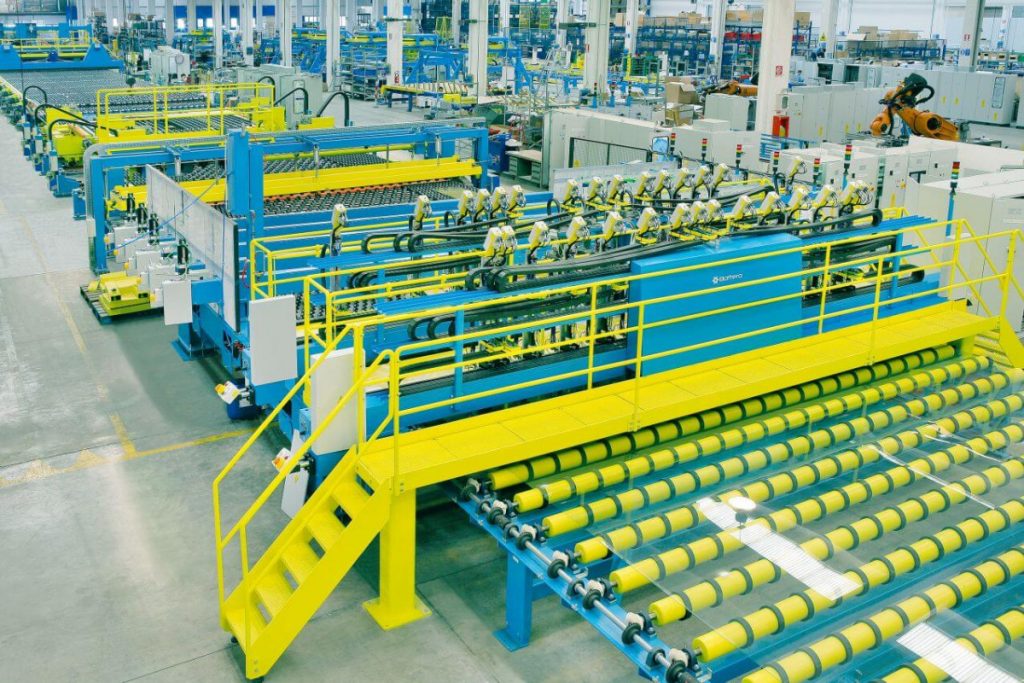
The scale of float glass production is immense. A typical float glass line can be up to 1,600 feet (500 meters) long and operate continuously for 18 to 20 years without stopping. A medium-sized line can produce roughly 600 tons of glass per day. The resulting glass ribbon can range in thickness from 2mm to 19mm and is typically cut into widths of over 3 meters.
The Annealing Process
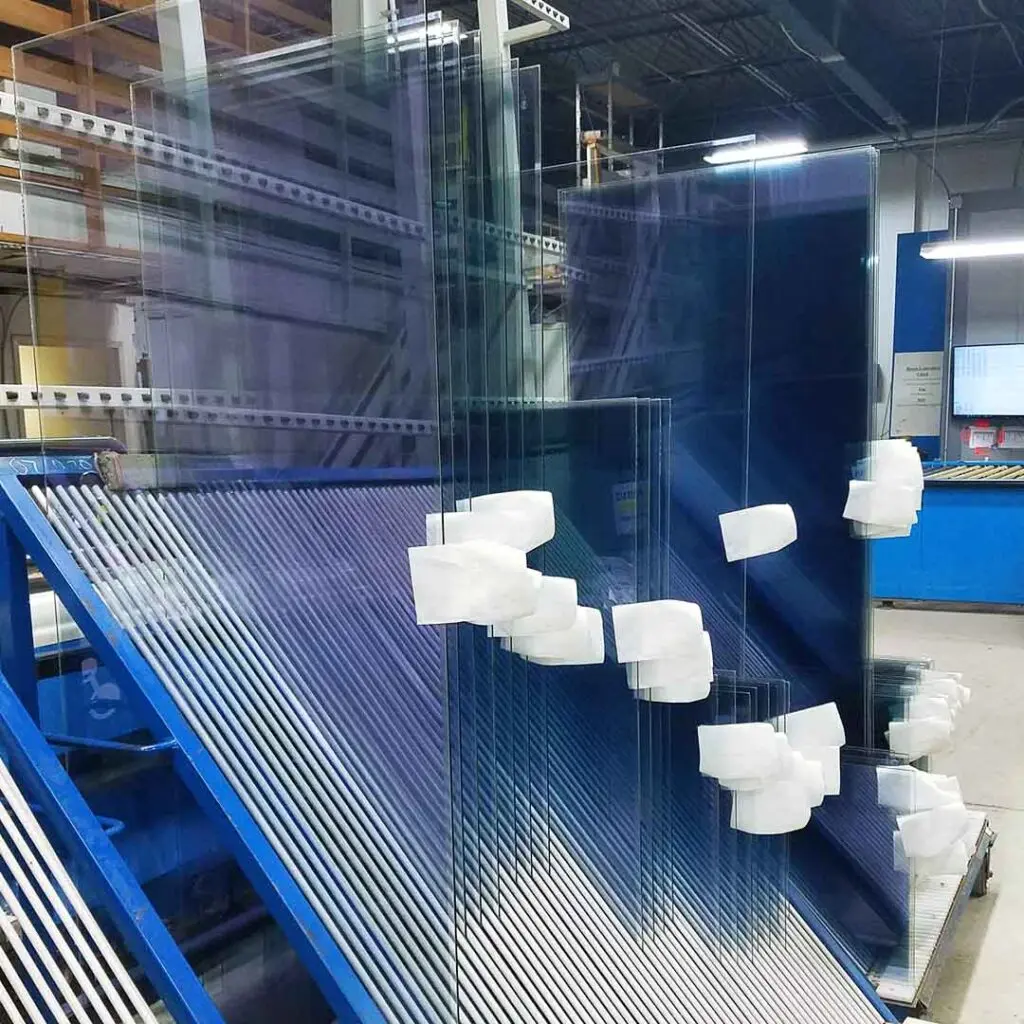
As the glass leaves the tin bath, it is still incredibly hot—around 600°C (1,100°F)—and effectively solid. However, if it were to cool too quickly, internal stresses would cause it to shatter. To prevent this, the glass passes through a temperature-controlled kiln called an annealing lehr.
In the lehr, the glass is subjected to forced air that gradually lowers its temperature to an ambient level. This controlled cooling process removes internal stresses, ensuring the glass has a uniform stress profile. This uniformity allows the glass to be cut, stored, and shipped without breaking.

Modifying Glass Properties
While the standard float glass process produces clear, flat sheets, modern applications often require glass with specific properties. Manufacturers can alter the chemical composition or apply post-production treatments to create specialized glass types.
Coloring and Tints
By adding different elements or chemicals to the sand mixture, manufacturers can change the color of the glass. For example, adding iron oxide can create greenish tints, while other minerals can produce blue, bronze, or gray variations. These tints are not just aesthetic; they can also offer functional benefits, such as reducing the transmission of heat and light.
Strengthening Techniques
For applications requiring superior durability and safety, glass undergoes further strengthening.
- Thermal Tempering: This involves heating the glass and then cooling it rapidly. The process creates tension in the glass core and compression on the surface, making tempered glass roughly four times stronger than standard annealed glass.
- Ion Exchange: This is a chemical strengthening process often used for electronic devices. The glass is submerged in a molten salt bath, where smaller sodium ions leave the glass and are replaced by larger potassium ions. This “stuffing” effect creates a layer of compressive stress on the surface, making the glass incredibly tough and resistant to damage.
The Intersection of Nature and Engineering
The production of glass is a remarkable example of how raw natural resources can be engineered into sophisticated materials. By understanding the chemistry of sand and applying precise thermal dynamics, manufacturers convert simple ingredients into a product that defines our modern skyline.
From the intense heat of the furnace to the precision of the float bath, every step in the process is designed to ensure clarity, durability, and versatility. As technology advances, the methods for strengthening and modifying glass continue to evolve, promising even more innovative applications for this ancient material in the future.