
Why Are Your Windows Foggy? Causes, Signs, and Fixes
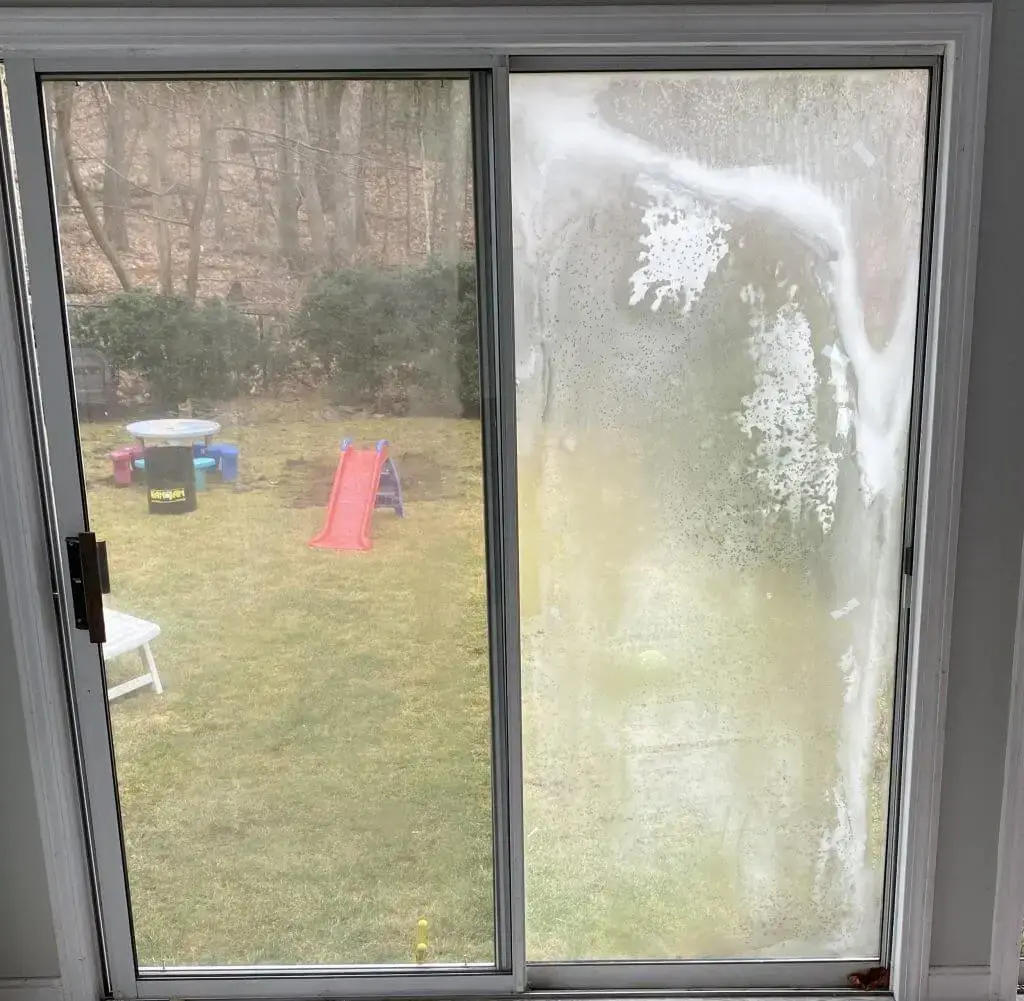
Fog between glass window panes is almost always caused by seal failure in a double-pane insulated glass unit (IGU). When the perimeter seal breaks down, moisture enters the sealed cavity, overwhelms the desiccant inside, and becomes permanently trapped producing the haze you see. Replacing the glass unit is the only lasting fix.
That cloudy haze between your window panes is not just an eyesore. It is a signal that your window has stopped doing one of its most important jobs: keeping moisture out. Most homeowners notice it first on cold mornings, when the fog appears and does not wipe away no matter how many times you try. That detail, the fog you cannot reach, tells you exactly where the problem is and why it matters.
Understanding the cause of foggy windows shapes every decision that follows. If you know whether you are dealing with a seal failure, a manufacturing defect, or simple age-related wear, you can decide whether to repair, replace the glass unit, or replace the full window. At S&L Glass Works, we have been diagnosing and fixing exactly these problems for homeowners and commercial clients since 1982. This guide walks you through what is actually happening inside your windows, what signs to watch for, and what your options are when the fog shows up.
What Causes Fog to Form Between Glass Window Panes?
The fog you see is moisture, water vapor that entered the sealed space between your panes and condensed into visible haze. There are four main reasons this happens.
How does seal failure cause fogging between window panes?
Seal failure is the most common cause by far. Modern double-pane windows also called insulated glass units or IGUs, are built with two panes of glass separated by a spacer bar, filled with an insulating gas (usually argon), and sealed tightly around the perimeter. That seal is what keeps outdoor humidity out and argon in.
Over time, the seal breaks down. Every time temperatures change, the glass and frame materials expand and contract. That constant movement creates micro-stress on the seal, and eventually it cracks or separates. According to Glass Doctor, the standard lifespan of a double-pane window seal ranges from 10 to 20 years. Once the seal goes, humid outdoor air enters the cavity and the fogging begins.
Poor installation accelerates this process. A window that is not set level and plumb puts uneven stress on the seal from day one, shortening its useful life significantly.
Can temperature fluctuations alone cause fog between window panes?
Temperature differences do not cause fogging on their own, but they are the trigger that makes existing seal problems visible. When a seal has been weakening for months or years, a sharp overnight temperature drop followed by a warm morning is often what finally pushes humid air through the gap and into the cavity in large enough quantities to produce visible fog.
This is why many homeowners notice the problem for the first time in fall or winter. The seal may have been compromised long before, but the temperature swing finally made it obvious.
Does window age contribute to seal failure and foggy glass?
Yes, and significantly. Even a well-made window with no installation problems will eventually show fog. The desiccant inside the spacer bar, a moisture-absorbing material, typically molecular sieve 3A has a fixed capacity. According to research by Installix, desiccant beads hold roughly 20% of their own weight in water. Once they are saturated, there is nothing left to absorb incoming moisture, and fog appears between the panes. That saturation point typically arrives somewhere between 15 and 25 years, depending on conditions.
Manufacturing defects can shorten that timeline. A unit with weak seals, inadequate desiccant, or a compromised spacer bar from the start may show fogging in as few as five to ten years.
How Moisture Gets Trapped Inside a Sealed Window Unit
The desiccant inside your window’s spacer bar is designed to absorb any trace moisture that seeps through the seal during the window’s normal life. Under ideal conditions, it keeps the cavity bone dry for decades. The problem is that its capacity is not unlimited.
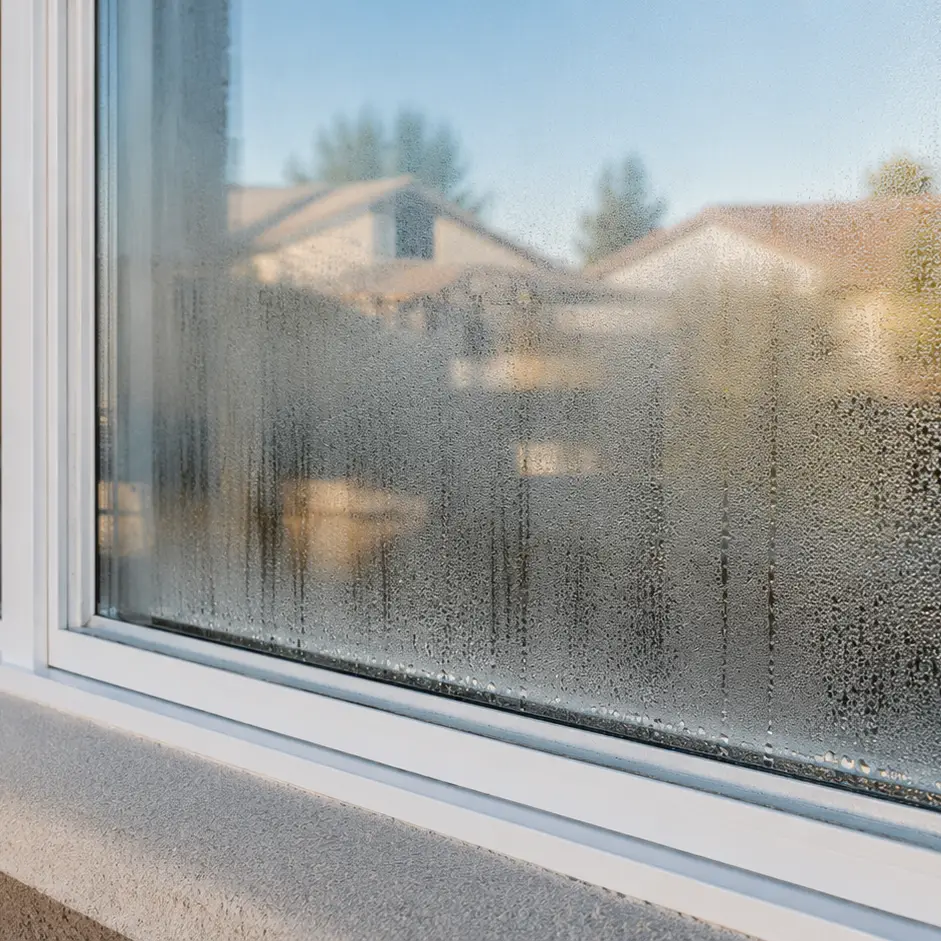
Think of the desiccant as a slow-filling sponge. Moisture enters the cavity at a small but constant rate through even a good seal, and the desiccant absorbs each trace amount. Once the sponge is full, the next wave of moisture has nowhere to go. It condenses on the inner glass surface when temperatures drop and that is the fog you see.
Once fogging starts, the progression typically follows four stages:
- Morning fog — Haze appears on cold mornings and clears by afternoon. The desiccant is nearly saturated but still buffering.
- Persistent haze — The fog takes longer to clear or never fully clears on cool days. The desiccant is done.
- Standing water — Visible droplets or a puddle line appear at the bottom of the glass.
- Mineral etching — Long-term moisture leaves white mineral deposits on the inner glass surface. At this stage, the damage is permanent even if the unit is somehow dried out.
Catching the problem at stage one or two gives you the most cost-effective options. By stage four, the glass itself is degraded.
What Are the Signs That Your Window Seals Are Failing?
You may be dealing with seal failure if you notice any of the following:
- Fog or haze that you cannot wipe away from either the inside or outside surface of the glass
- Condensation patterns that appear in the morning and partially clear by afternoon
- Water droplets or streaks between the panes that shift position over time
- A cloudy or milky appearance on what should be clear glass
- Increased heating and cooling bills with no other obvious cause
On the performance side, the numbers are meaningful. According to the U.S. Department of Energy, heat gain and heat loss through windows account for 25 to 30 percent of residential heating and cooling energy use. Industry data indicates that insulated glass unit failure increases those heating and cooling costs by an additional 15 to 25 percent. A foggy window is not just cosmetically bad, it is costing you money every month.

Why Foggy Windows Affect More Than Just Your View
A failed window seal creates a chain of consequences. The argon gas that provided superior insulation has leaked out, replaced by ordinary air that conducts heat and cold more easily. Your HVAC system compensates by running longer. Over a full heating season, that adds up.
Beyond energy costs, persistent moisture between the panes can eventually cause mineral deposits to etch the glass permanently, damage the spacer bar and frame materials, and if moisture migrates outward soften the surrounding wall cavity or window frame. Addressing a foggy window early is almost always cheaper than addressing the secondary damage that follows if it is left alone.
Repair vs. Replacement: What Are Your Options for Foggy Windows?
The first question most homeowners ask is whether a foggy window can be repaired rather than replaced.
Defogging services — drilling small holes in the glass unit to remove moisture — are available, but they have a significant limitation. They can clear visible fog temporarily, but they do not restore the broken seal or replenish the insulating gas. Most defogged windows show signs of returning haze within one to two years, and the window’s thermal performance is not restored.
Insulated glass unit replacement is the lasting solution for most situations. A technician removes the failed glass unit from your existing frame, installs a new factory-sealed unit with fresh desiccant and a full argon fill, and your window performs like new — without the cost of replacing the entire frame and surrounding materials. This is the right choice when the frame itself is structurally sound.
Full window replacement makes more sense when the frame shows rot, warping, air leaks, or when the window is more than 15 to 20 years old and shows multiple signs of wear. In those cases, replacing just the glass is a short-term fix for a system that is near the end of its useful life.
How S&L Glass Works Can Help with Foggy or Failed Window Seals
Diagnosing the right fix starts with a proper inspection. At S&L Glass Works, our glass professionals examine the entire unit — not just the visible fog — to assess the condition of the seal, spacer bar, and frame before making a recommendation. We work with all standard residential and commercial window types, and we carry insulated, tempered, laminated, and safety glass to match whatever your existing windows require.
If your frames are in good shape, we can often resolve the problem with a glass-only replacement at a fraction of the cost of new windows. If the frame or surrounding structure needs attention, we will tell you that clearly and explain your options.
Pro tip: Take note of how long the fogging has been present and whether it changes with temperature. That information helps our technicians quickly identify which stage of seal failure you are dealing with — and quote you accurately on the first visit.

Stop Foggy Windows Before They Cost You More
Fog between your window panes is a fixable problem. The sooner you address it, the more options you have and the more money you save on both the repair and the ongoing energy bills a failed seal produces.
When you are ready to find out exactly what is happening with your windows, contact the professionals at S&L Glass Works. We have been serving residential and commercial clients since 1982, and we bring that same straightforward approach to every job: honest assessment, clear pricing, and quality glass installation done right. Call us at (215) 428-4010
to schedule an inspection.
Frequently Asked Questions About Foggy Windows
Why is there fog between my window panes that won't wipe off?
Fog that you cannot wipe away from either side of the glass is trapped inside the sealed cavity of a double-pane window. This happens when the perimeter seal fails and allows moisture to enter the insulated glass unit. The moisture is not on a surface you can reach it is between the panes, so cleaning does not help. The only permanent fix is replacing the glass unit.
How long do window seals last before they start to fail?
Most window seals last between 10 and 20 years, according to Glass Doctor. The desiccant inside the spacer bar typically reaches saturation the point at which fogging becomes visible, between 15 and 25 years. South- or west-facing windows that receive direct sun daily tend to fail faster because heat accelerates seal expansion and contraction.
Can a defogging kit or DIY fix clear moisture between window panes permanently?
No. DIY defogging kits and drill-and-dry services can temporarily remove visible moisture, but they do not repair the broken seal or restore the insulating gas. Moisture continues to enter at the same rate, the fresh desiccant saturates quickly, and the fog typically returns within one to two years. A new factory-sealed glass unit is the only lasting solution.
Does fog between window panes mean I need to replace the entire window?
Not necessarily. If your window frames are structurally sound, no rot, warping, or air leaks, replacing only the insulated glass unit is usually sufficient and significantly more affordable than full window replacement. A glass professional can inspect your frames and give you a clear recommendation based on their actual condition.
How do foggy windows affect my energy bills?
According to the U.S. Department of Energy, windows account for 25 to 30 percent of residential heating and cooling energy use under normal conditions. A failed window seal allows the insulating argon gas to escape and be replaced by ordinary air, which conducts heat and cold more efficiently. Industry data indicates that this can increase heating and cooling costs by 15 to 25 percent for the affected windows.
What is the desiccant inside a window, and why does it matter?
Desiccant is a moisture-absorbing material packed inside the window’s spacer bar. The most common type, molecular sieve 3A, holds roughly 20 percent of its own weight in water and keeps the sealed cavity dry for years. Once the desiccant reaches full capacity which typically happens after 15 to 25 years, or sooner if the seal is compromised, it can no longer absorb incoming moisture, and visible fogging begins.